
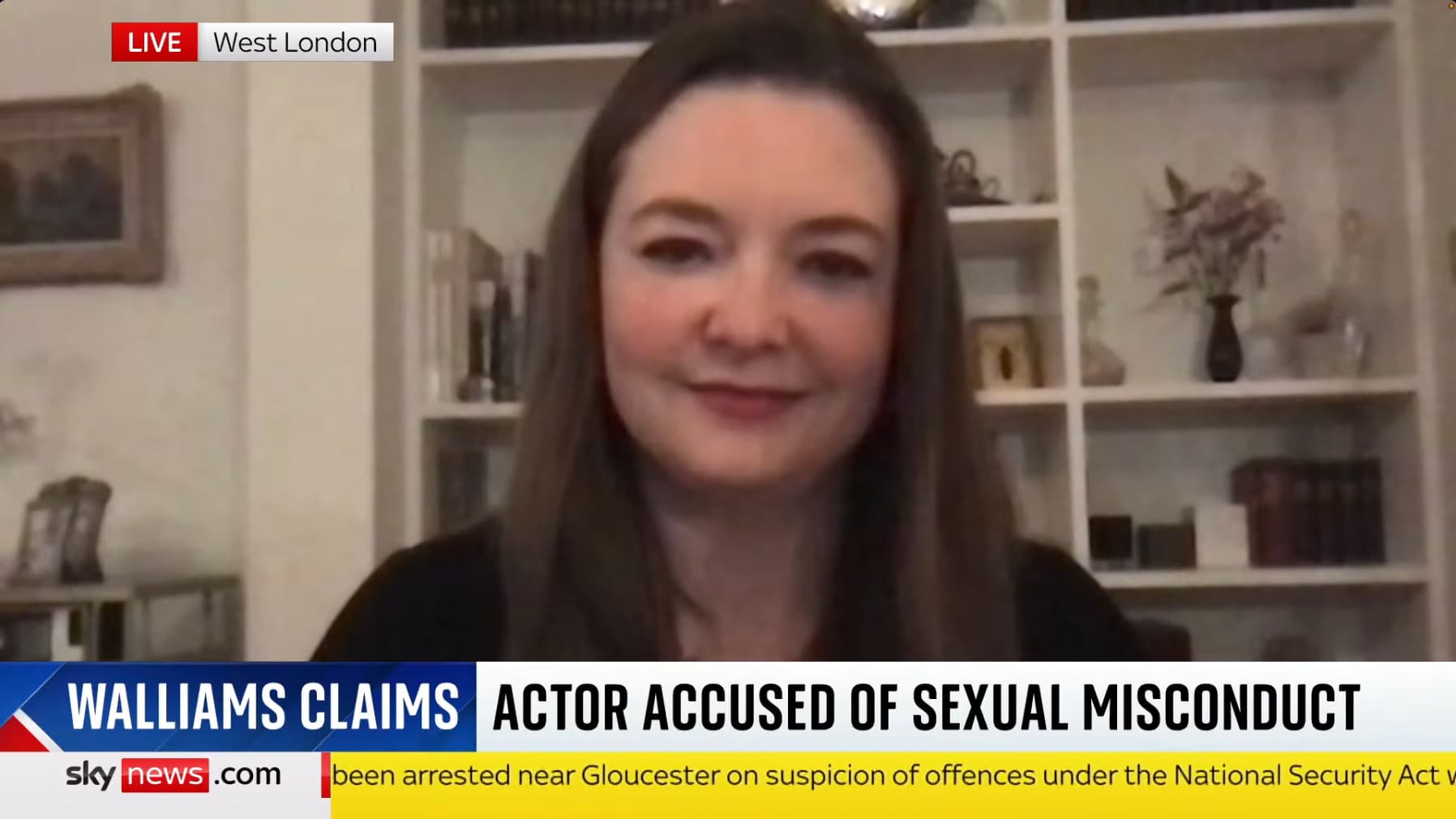
Lia Perin joined Sarah-Jane Mee on Sky News’ The UK Tonight and James Coomarasamy on BBC Radio 4’s The World Tonight on Tuesday, 10 November 2026 to discuss the injunction proceedings brought by David Walliams.
Discussion Points
Lia explained how injunctions are obtained and the factors courts consider when deciding whether to grant them. She discussed the arguments advanced by Mr Walliams’ legal team, the potential impact of an injunction and the court’s reasons for refusing his application. Lia also explored the growing use of privacy injunctions, concerns about their misuse, the circumstances in which they are granted, and their effectiveness in an age of social media and international reporting.
Listen to Lia Perin’s interview on BBC Radio 4 here.
Background to the Proceedings
Mr Walliams sought an injunction to prevent ITN and The Guardian from publishing allegations that he had used his power and celebrity status to prey on young adults and teenagers. He denies the allegations.
Mr Walliams’ legal team argued that he would be “highly likely” to attempt to take his own life if the allegations were published, and that only the court could protect his rights under Articles 2 (right to life) and 3 (prohibition of torture and inhuman or degrading treatment) of the European Convention on Human Rights (ECHR). They also relied on Article 8 (right to respect for private and family life), arguing that publication would leave his relationship with his son “lost or seriously damaged”.
The Guardian and ITN argued that requiring courts to prevent publication to protect a claimant from the risk of self-harm would represent a “radical and unprincipled expansion” of their duties. They also argued that the right to freedom of expression under Article 10 outweighed Mr Walliams’ right to respect for private and family life.
On 3 November 2026, Mr Justice Nicklin refused the injunction, concluding that the state had assumed responsibility for Mr Walliams’ safety through NHS psychiatric hospitals and mental health services. Although he accepted that publication would have an “exceptionally grave impact” on Mr Walliams’ private and family life, he ruled in favour of freedom of expression, stating that the public had a right to “receive information and ideas on matters of public interest”.
Mr Walliams had until 4.30pm on Monday, 9 November 2026 to appeal but did not do so.
If you would like to get in touch to confidentially seek advice, please send an email to enquiries@taylorhampton.co.uk and we will arrange to give you a call.
Disclaimer: This article provides general guidance only and does not constitute legal advice. Civil procedure rules and case law can change. Always seek professional legal advice tailored to your specific situation before acting.